
- Home
- About Us
-
Training
▼
- Graphics Design
- 3D Animation & VFX
- UI & UX Design
- Interior Design | Architecture
- Civil Engineering
- Mechanical Engineering
- CNC & CAM Engineering
- Mould Design Engineering
- Art CAM Design Engineering
- Electrical Engineering
- Automobile Electric Automation Engineering
- Computer Aided Design Course Content
- Computer Aided Engineering
- Aeronautical Engineering
- Advance Program In MEP
- Advance Program In Composition and Editing
- 3D Scan Reverse Engineering In Product Design
- Gallary ▼
- Blog
- Inquiry
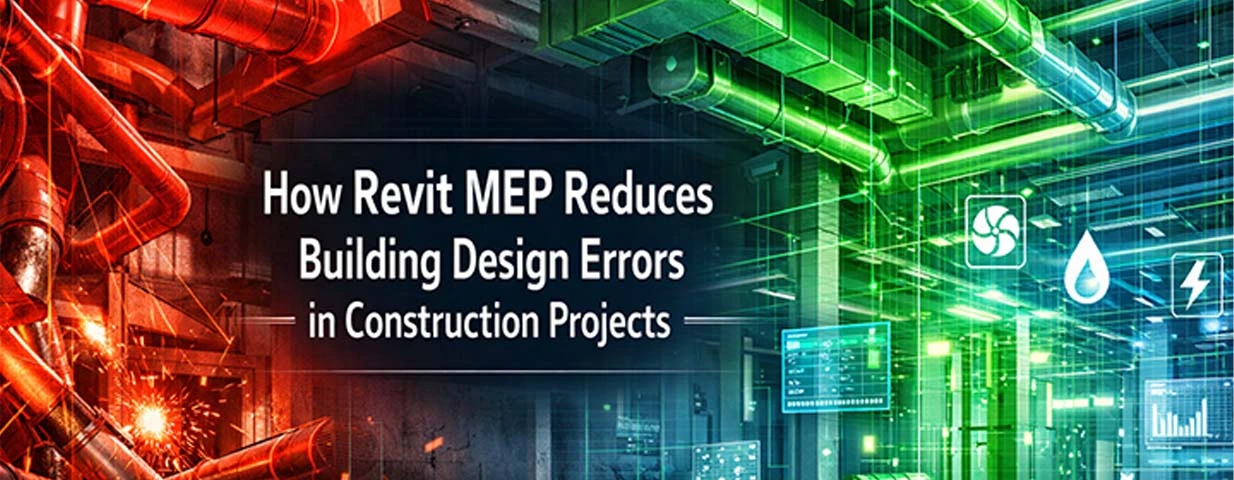
How Revit MEP Reduces Building Design Errors in Construction Projects
Construction projects today are more complex than ever. Buildings include integrated systems such as HVAC, electrical networks, fire safety, and plumbing—all of which must work together seamlessly. Even a small design mistake can lead to major delays, cost overruns, or on-site rework.
This is where Autodesk Revit MEP has become an essential tool. It enables engineers to create accurate, coordinated building system models that reduce errors long before construction begins.
For students and professionals aiming to enter this field, joining a Revit MEP course in Ahmedabad at a reputed engineering design institute in Ahmedabad can help build strong, job-ready skills.
Why Design Errors Happen in Construction
Traditional construction workflows rely heavily on separate drawings created by different teams. Mechanical, electrical, and plumbing designs are often prepared independently, which leads to:
- System clashes in limited space
- Inconsistent design updates
- Communication gaps between teams
- Errors discovered during execution
These problems increase project timelines and lead to higher costs. Modern construction requires a smarter approach to eliminate such risks early.
How Revit MEP Minimizes Design Errors
1. Unified 3D BIM Modeling
Revit MEP allows all building systems to be designed within a single 3D model. Every element is interconnected, ensuring that changes made in one area automatically update across the entire project.
This eliminates the need for manual corrections and ensures consistent design accuracy.
2. Early Clash Detection
One of the most powerful features of Revit MEP is its ability to detect conflicts before construction begins.
For example:
- Air ducts interfering with structural beams
- Pipes overlapping electrical conduits
- Equipment is placed in inaccessible locations
By identifying these issues early, engineers can resolve them during the design phase itself.
AEO Answer:
How does Revit MEP reduce design errors?
Revit MEP reduces errors by using coordinated 3D models and clash detection to identify and fix conflicts before construction starts.
3. Real-Time Design Updates
In conventional drafting, a single design change requires updates in multiple drawings, increasing the risk of errors.
Revit MEP solves this by automatically updating:
- Floor plans
- Sections and elevations
- Schedules and documentation
Students enrolled in a MEP design course in Ahmedabad learn how to manage real-time updates efficiently.
4. Accurate System Routing
Designing efficient routes for ducts, cables, and pipes is crucial for building performance.
Revit MEP helps engineers:
- Optimize space utilization
- Avoid unnecessary bends and overlaps
- Improve system efficiency
This leads to smoother installation and better long-term performance of building systems.
5. Improved Team Collaboration
Revit MEP allows multiple professionals to work on the same project model. Architects, structural engineers, and MEP designers can collaborate in real time.
This ensures:
- Better communication
- Faster problem-solving
- Fewer design conflicts
Training at a BIM training institute in Ahmedabad prepares students for these collaborative workflows used in real projects.
Key Benefits for Construction Projects
Using Revit MEP offers several advantages:
- Reduces design errors before execution
- Minimizes project delays
- Lowers construction costs
- Improves documentation accuracy
- Enhances coordination across teams
These benefits make BIM-based design essential for modern infrastructure projects.
Career Opportunities in MEP Design
As construction companies adopt digital workflows, demand for skilled professionals is increasing.
After completing a Revit MEP training program in Ahmedabad, career options include:
- MEP Design Engineer
- HVAC System Planner
- Electrical Design Specialist
- Plumbing Layout Engineer
- BIM Coordinator
Ahmedabad’s growing construction and infrastructure sector provides strong job opportunities for trained professionals.
Why Learning Revit MEP Is Important in 2026
The construction industry is shifting toward digital design and smart building solutions. Engineers who understand BIM workflows are better equipped to handle modern projects.
By enrolling in a Revit MEP course in Ahmedabad at a recognized engineering design institute in Ahmedabad, you can gain practical experience and improve your career prospects.
Final Thoughts
Revit MEP has transformed building design by introducing intelligent modeling, real-time updates, and early conflict detection. It helps engineers identify and resolve issues before construction begins, saving both time and cost.
As BIM continues to shape the future of construction, professionals skilled in Revit MEP will play a key role in delivering efficient, error-free projects.
Investing in the right training today can help you build a strong and successful career in the construction and design industry.