
- Home
- About Us
-
Training
▼
- Graphics Design
- 3D Animation & VFX
- UI & UX Design
- Interior Design | Architecture
- Civil Engineering
- Mechanical Engineering
- CNC & CAM Engineering
- Mould Design Engineering
- Art CAM Design Engineering
- Electrical Engineering
- Automobile Electric Automation Engineering
- Computer Aided Design Course Content
- Computer Aided Engineering
- Aeronautical Engineering
- Advance Program In MEP
- Advance Program In Composition and Editing
- 3D Scan Reverse Engineering In Product Design
- Gallary ▼
- Blog
- Inquiry
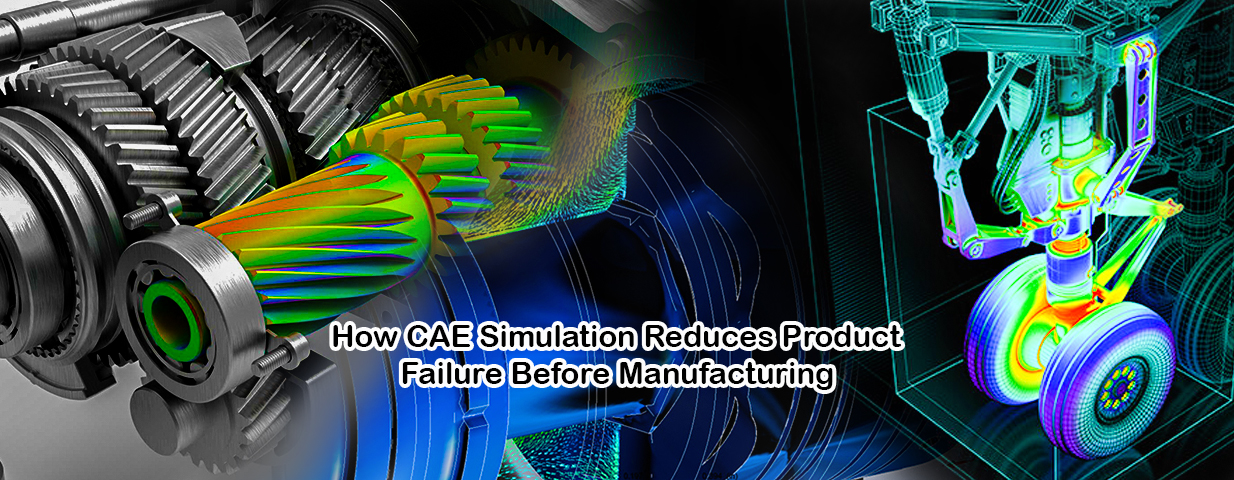
How CAE Simulation Reduces Product Failure Before Manufacturing.
In modern manufacturing, product failure can cost companies millions in recalls, repairs, and reputation damage. That’s why businesses rely on Computer-Aided Engineering (CAE) to test and validate designs before production begins. CAE simulation allows engineers to analyze product performance digitally, reducing risks and ensuring reliability.
If you are planning to enroll in a Computer-Aided Engineering Course or are looking for a trusted engineering design institute in Ahmedabad, understanding the importance of CAE in real-world industries is essential.
What Is CAE Simulation?
CAE simulation is the process of using advanced software tools to test how a product will behave under real-world conditions — before it is physically manufactured.
It helps engineers evaluate:
- Structural strength
- Thermal behavior
- Fluid flow performance
- Vibration and fatigue life
- Stress and deformation
Instead of building multiple physical prototypes, engineers use digital models to detect potential issues early.
Why Is Product Failure So Expensive?
Product failure after manufacturing can result in:
- Costly recalls
- Safety hazards
- Legal penalties
- Loss of brand trust
- Production delays
By identifying weaknesses in the design phase, CAE significantly reduces these risks.
How CAE Simulation Prevents Product Failure
1. Early Detection of Design Flaws
CAE tools like FEA and CFD help engineers identify structural weaknesses, excessive stress points, and overheating risks. Early correction prevents future breakdowns.
2. Optimized Material Usage
Simulation allows engineers to test different materials and thickness levels digitally. This ensures strength without overdesign, reducing manufacturing costs.
3. Improved Safety Standards
Industries such as automotive, aerospace, and energy must meet strict compliance regulations. CAE helps validate safety standards before products enter production.
4. Reduced Prototype Testing
Traditional product development required multiple physical models for testing. CAE minimizes this need, saving time and resources.
5. Faster Product Development
By validating performance virtually, companies shorten development cycles and reach the market faster.
Industries That Depend on CAE
CAE simulation plays a major role in:
- Automotive engineering
- Aerospace design
- Electrical systems
- Heavy machinery manufacturing
- Renewable energy projects
Professionals trained at a reputed engineering design institute gain hands-on experience in tools widely used across these sectors.
Career Scope in CAE
The demand for simulation engineers is growing rapidly in 2026 and beyond. Companies seek professionals skilled in structural analysis, thermal analysis, and fluid dynamics simulation.
By enrolling in a Computer-Aided Engineering Course in Ahmedabad, students can build expertise in industry-relevant tools and improve employability.
A recognized engineering design institute in Ahmedabad provides practical training, live projects, and placement support — helping students transition smoothly into high-demand roles.
Frequently Asked Questions (AEO-Optimized)
What is CAE used for?
How does CAE reduce manufacturing costs?
Is CAE a good career option in 2026?
Where can I learn CAE in Ahmedabad?
Why Learning CAE Is Essential Today
With Industry 4.0 and digital transformation, companies prefer engineers who can predict product performance before production. CAE skills not only reduce product failure but also enhance innovation, efficiency, and sustainability.
If you aim to build a strong career in mechanical, automotive, or electrical design, choosing the right Computer-Aided Engineering Course at a leading engineering design institute can be your first step toward success.
Conclusion
CAE simulation has transformed modern engineering by reducing product failure risks before manufacturing begins. It improves safety, lowers costs, shortens development cycles, and enhances product reliability.
As industries continue to adopt digital engineering technologies, professionals trained through a structured Computer-Aided Engineering Course in Ahmedabad will remain in high demand. Selecting the right engineering design institute in Ahmedabad ensures practical exposure, industry alignment, and strong career growth opportunities.