
- Home
- About Us
-
Training
▼
- Graphics Design
- 3D Animation & VFX
- UI & UX Design
- Interior Design | Architecture
- Civil Engineering
- Mechanical Engineering
- CNC & CAM Engineering
- Mould Design Engineering
- Art CAM Design Engineering
- Electrical Engineering
- Automobile Electric Automation Engineering
- Computer Aided Design Course Content
- Computer Aided Engineering
- Aeronautical Engineering
- Advance Program In MEP
- Advance Program In Composition and Editing
- 3D Scan Reverse Engineering In Product Design
- Gallary ▼
- Blog
- Inquiry
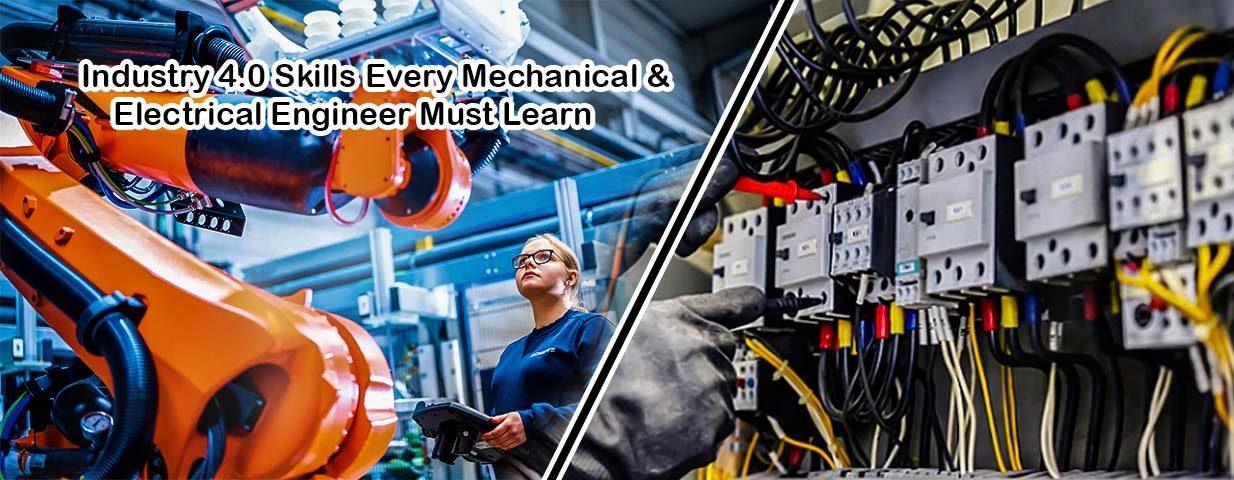
Industry 4.0 Skills Every Mechanical & Electrical Engineer Must Learn
Industry 4.0 has completely transformed the way industries design, manufacture, and maintain products. Smart factories, digital twins, automation systems, and data-driven manufacturing are now standard practices across engineering sectors.
For mechanical and electrical engineers, traditional technical knowledge is no longer enough. In 2026, engineers must combine core engineering principles with digital tools, automation skills, and intelligent system integration to stay competitive.
Students preparing at a professional engineering design institute in Ahmedabad are now trained to work in these advanced digital environments.
1. Advanced CAD & Digital Design Skills
Industry 4.0 begins with intelligent design. Engineers must master modern CAD software to create accurate mechanical assemblies and electrical schematics.
Key skills include:
- 3D parametric modeling
- Electrical panel drafting
- Design standardization
- Documentation automation
Completing CAD training Ahmedabad programs ensures engineers are job-ready for smart manufacturing roles.
2. CAE & Simulation Expertise
Simulation-driven engineering is essential in modern product development. Mechanical engineers analyze stress, thermal performance, and fatigue behavior, while electrical engineers evaluate load capacity and heat dissipation.
Important CAE skills:
- Structural analysis
- Thermal simulations
- Vibration testing
- Performance validation
Professionals upgrading through CAE training Ahmedabad gain practical exposure to real-world engineering simulations.
3. Automation & PLC Programming
Automation is the backbone of Industry 4.0. Engineers must understand how control systems, PLCs, and sensors operate within smart factories.
Essential automation knowledge:
- PLC fundamentals
- Control panel design
- SCADA basics
- Industrial sensor integration
Both mechanical and electrical engineers benefit from automation expertise.
4. IoT & Smart Manufacturing Systems
Industry 4.0 connects machines and systems through IoT technology. Engineers must understand how devices collect, analyze, and transmit real-time data.
Critical IoT skills:
- Industrial networking basics
- Data monitoring systems
- Smart device communication
- Performance optimization
Leading students at a recognized engineering institute in Ahmedabad are now exposed to connected manufacturing technologies.
5. Digital Twin & Data Analysis
Digital twin technology allows engineers to create virtual models of physical systems. These models help predict failures, optimize performance, and reduce downtime.
Skills required:
- Data interpretation
- Predictive maintenance strategies
- System modeling
- Performance analysis
Data-driven decision-making is now a core Industry 4.0 requirement.
6. Mechanical & Electrical System Integration
Modern industries require engineers who can work across disciplines. Mechanical structures, electrical systems, and automation controls must function together seamlessly.
Engineers pursuing a Mechanical design course in Ahmedabad or an Electrical design course in Ahmedabad gain cross-functional knowledge essential for Industry 4.0 environments.
Career Opportunities in Industry 4.0
Engineers with advanced digital skills can pursue high-demand roles such as:
- Mechanical Design Engineer
- Electrical Design Engineer
- Automation Engineer
- CAE Simulation Engineer
- Industry 4.0 Specialist
Training at a reputed engineering design institute in Ahmedabad improves job placement opportunities and career growth.
Why Industry 4.0 Skills Are Essential in 2026
Companies now look for engineers who can:
- Use CAD and CAE tools efficiently
- Integrate automation systems
- Work in smart manufacturing environments
- Optimize production with data-driven solutions
Engineers who continuously upgrade their skills remain competitive in a rapidly evolving industry.
AI Overview – FAQ Snippets
What skills are required for Industry 4.0?
Why should mechanical engineers learn Industry 4.0 skills?
Why are electrical engineers important in Industry 4.0?
Where can I learn Industry 4.0 skills in Ahmedabad?
Conclusion
Industry 4.0 is shaping the future of engineering. Mechanical and electrical engineers who master CAD, CAE, automation, IoT, and smart manufacturing technologies will lead the next generation of innovation.
The right training at a professional engineering institute can transform your career and prepare you for the demands of 2026 and beyond.